

The dream of writing a book is universal, but the process is daunting. From structuring a compelling plot and developing characters to maintaining narrative consistency across hundreds of pages, the challenges can stall even the most determined writer. Today, authors are finding a powerful new partner in artificial intelligence. This isn’t about replacing creativity but augmenting it. The right AI can act as a tireless brainstorming partner, a meticulous structural editor, or a creative co-pilot to help you navigate writer’s block.
With a crowded market, finding the best AI for writing a book that fits your specific needs is a significant hurdle. This comprehensive guide cuts through the noise. We have curated and reviewed 12 top-tier AI platforms, breaking them down by their strengths across the entire book creation lifecycle, from initial concept and world-building to final polish and formatting. For those looking to delve deeper into specialized tools for long-form fiction, exploring dedicated AI writing software for novelists can offer valuable insights.
This resource is designed to be actionable. Each entry includes detailed analysis, sample outputs, screenshots, and direct links to help you make an informed decision. We provide honest assessments of limitations and practical use cases to help you choose the right tool to bring your story to life, whether you’re outlining your first chapter or preparing your manuscript for publishing. Let’s explore the AI assistants ready to join your writing journey.
1. Azure OpenAI Service: The Professional’s Choice for Unparalleled Power and Security
For authors, publishers, and writing teams who require enterprise-grade capabilities, the Azure OpenAI Service represents the pinnacle of AI-assisted book writing. It provides direct access to OpenAI’s most advanced models, including the GPT-4 family, but through Microsoft’s secure, compliant, and highly scalable cloud infrastructure. This isn’t a simple consumer application; it’s a professional-grade platform that offers unparalleled control over your data and creative process, making it a strong contender for the best AI for writing a book when security and power are non-negotiable.

What truly sets this option apart is its focus on operationalizing AI for long-form creative projects. The platform moves beyond basic text generation to support sophisticated authorial workflows. You can fine-tune models on your own material to develop a unique narrative voice, build custom tools for character arc development, or deploy scalable solutions for iterative drafting and revision across a large manuscript.
Key Strengths and Use Cases
The primary advantage of Azure OpenAI is its combination of cutting-edge model access with robust corporate governance. Your data is not used to train OpenAI’s public models, a critical assurance for publishers handling sensitive intellectual property.
- For Publishers & Teams: Deploy a secure, private instance of GPT-4 for your entire editorial team, ensuring consistency and protecting pre-release content.
- For Technical Authors: Leverage the API to build custom writing assistants tailored to your specific genre or style, from world-building knowledge bases to plot consistency checkers.
- For Ghostwriters: Manage multiple author projects in isolated, secure environments, ensuring client confidentiality and data integrity.
Implementation and Considerations
Accessing the service requires a Microsoft Azure account and an application process, which involves a learning curve compared to off-the-shelf tools. Pricing is based on cloud consumption (pay-as-you-go), which offers flexibility but requires careful cost management for large-scale projects. ThinkZipper’s guide offers a vendor-neutral walkthrough, detailing the setup, potential costs, and practical steps to integrate this powerful service into a professional writing pipeline.
- Best For: Publishing houses, author teams, and technically inclined writers who need maximum control, security, and access to state-of-the-art AI models.
- Pricing: Pay-as-you-go based on token usage and cloud resource consumption. Requires an Azure subscription.
- Access: Learn more at ThinkZipper’s Azure OpenAI Service Guide
2. OpenAI — ChatGPT
While many specialized tools exist, sometimes the best AI for writing a book is a powerful, general-purpose model. OpenAI’s ChatGPT, particularly with GPT-4 and above, excels at the conceptual heavy lifting required for novel writing. Its strength lies in its advanced reasoning, making it a superb partner for brainstorming plot points, developing complex character arcs, and structuring chapter-by-chapter outlines.
Unlike dedicated writing platforms, ChatGPT is a conversational sandbox. You can feed it a simple premise and ask it to expand on themes, suggest subplots, or even draft entire scenes. Its large context window allows for long-form generation, though very large manuscripts may need to be processed in chunks. For authors who value a collaborative, back-and-forth creative process, this is an invaluable tool.
Key Features & Pricing
| Feature | Free Plan | Plus Plan ($20/mo) | Team Plan ($25/user/mo) |
|---|---|---|---|
| Model Access | GPT-3.5 | GPT-4, GPT-4o | GPT-4, GPT-4o (Higher limits) |
| Context Window | Standard | Large | Very Large |
| Custom GPTs | Limited | Yes | Yes |
| Admin Controls | No | No | Yes (SSO, SOC 2) |
Best For: Authors who need a powerful brainstorming and structural assistant for outlining, character development, and first drafts.
Pro Tip: Use Custom GPTs to create a "Book Writing Assistant" pre-loaded with your novel's synopsis, character sheets, and world-building rules. This ensures consistent output that aligns with your story's canon.
While excellent for drafting, remember that AI-generated text can sometimes lack a distinct voice. Learning how to maintain an authentic, human-like tone is crucial for producing a final manuscript that connects with readers. Similarly, it's vital to understand the model's limitations for highly specialized tasks; for example, learning why Papago and ChatGPT aren't enough for nuanced book translation highlights where domain-specific tools are necessary.
3. Anthropic — Claude
For authors managing book-length manuscripts, context is everything. Anthropic’s Claude, particularly its latest models, has become a top contender as the best AI for writing a book due to its massive 200K-token context window. This allows it to hold an entire novel’s worth of text in memory, making it exceptionally skilled at maintaining plot consistency, character voice, and thematic coherence across multiple chapters.
Claude excels at tasks that require a deep understanding of a large body of text. You can upload several chapters and ask it to summarize character arcs, identify plot holes, or suggest revisions that align with an earlier chapter's tone. Its strength in summarization and analysis makes it an indispensable partner for complex structural edits and revisions, offering a more holistic view of your manuscript than models with smaller context windows.
Key Features & Pricing
| Feature | Free Plan | Pro Plan ($20/mo) | Team Plan ($30/user/mo) |
|---|---|---|---|
| Model Access | Claude 3 Sonnet | Claude 3 Opus, Sonnet, Haiku | Claude 3 Opus, Sonnet, Haiku |
| Context Window | 200K Tokens | 200K Tokens (Higher usage) | 200K Tokens (Higher usage) |
| Usage Limits | Standard | 5x Higher Than Free | Even Higher Limits |
| Admin Tools | No | No | Yes (User Management) |
Best For: Writers who need a powerful AI assistant for revising and maintaining consistency across long-form projects like novels and multi-chapter manuscripts.
Pro Tip: Use Claude’s "Projects" feature to create a dedicated workspace for your book. Upload your outline, character bios, and existing chapters as source material. This allows Claude to reference your entire project's canon when generating new scenes or suggesting edits.
4. Google — Gemini
For authors deeply embedded in the Google ecosystem, Gemini offers a compelling, integrated AI writing experience. Its primary advantage is not as a standalone novel-writing app, but as a powerful research and drafting assistant that lives right inside the tools you already use, like Docs and NotebookLM. It’s an ideal AI for writing a book when your process involves heavy research, source synthesis, and collaborative drafting.
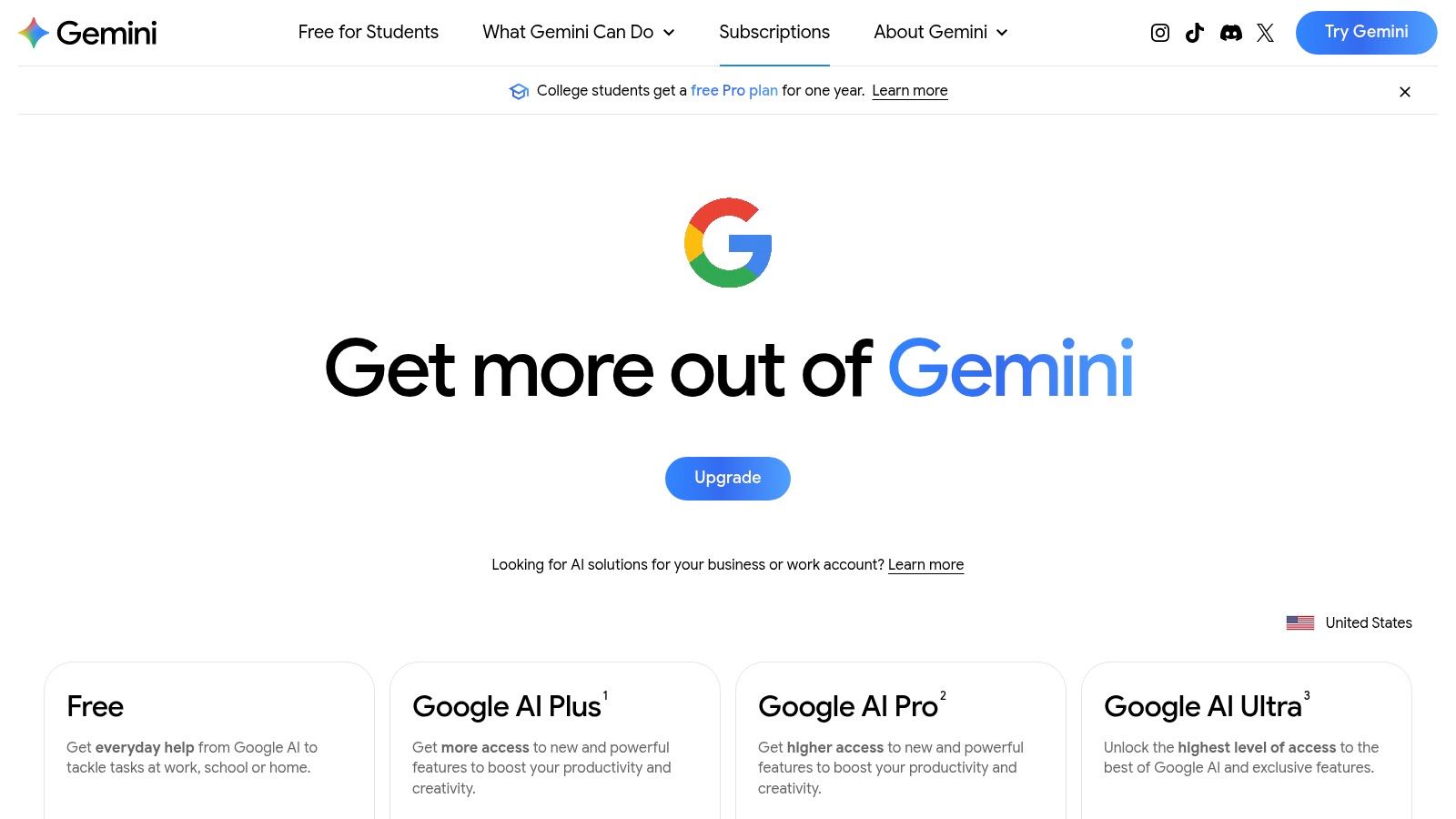
Unlike specialized apps with built-in story bibles, Gemini’s strength is its direct integration with your research materials and manuscript. Using NotebookLM, you can upload your research, world-building documents, and character notes to create a source-grounded AI that answers questions based on your unique canon. This seamless workflow, from research synthesis in NotebookLM to drafting and rewriting in Google Docs, minimizes friction and keeps you focused on the narrative.
Key Features & Pricing
| Feature | Gemini (Free) | Gemini Advanced ($19.99/mo) | AI Premium ($10/user/mo) |
|---|---|---|---|
| Model Access | Gemini Pro | Gemini 1.5 Pro | Gemini in Workspace |
| Context Window | Standard | 1M tokens | Integrated |
| Workspace Integration | No | Coming Soon | Yes (Docs, Sheets, etc.) |
| NotebookLM | Standard | Standard | Standard |
Best For: Authors who heavily rely on research and prefer to draft, outline, and collaborate within the Google Workspace ecosystem.
Pro Tip: Use NotebookLM to create a “Research Packet” for each major chapter. Upload relevant historical articles, character interviews, and location descriptions, then ask it to generate a detailed summary with citations to streamline your drafting process.
While Gemini is a research powerhouse, its text generation can sometimes feel more functional than creative. It’s essential to actively guide its voice and style. You can improve output by studying how to develop a consistent brand voice with AI, applying those principles to your character and narrative voice. For those needing more advanced story structure tools, you might find that exploring the best screenwriting software provides useful frameworks that can be adapted for novel writing alongside Gemini.
5. Sudowrite
For authors seeking a tool built from the ground up for fiction, Sudowrite is arguably the most mature and purpose-driven platform available. Unlike general-purpose AI, its entire feature set is tailored to the specific needs of novelists. Sudowrite excels at creating a cohesive world and maintaining narrative consistency through its powerful Story Bible, which tracks characters, locations, and lore to prevent continuity errors.
The platform's standout feature is its 'Write' button, offering tools like 'Describe' to enrich sensory details and 'Expand' to flesh out scenes. Authors can generate entire first drafts chapter by chapter with fine-tuned control over point of view, tense, and tone. Sudowrite is less a blank-page generator and more a highly specialized assistant that integrates directly into the creative writing workflow, making it a top contender for the best AI for writing a book.
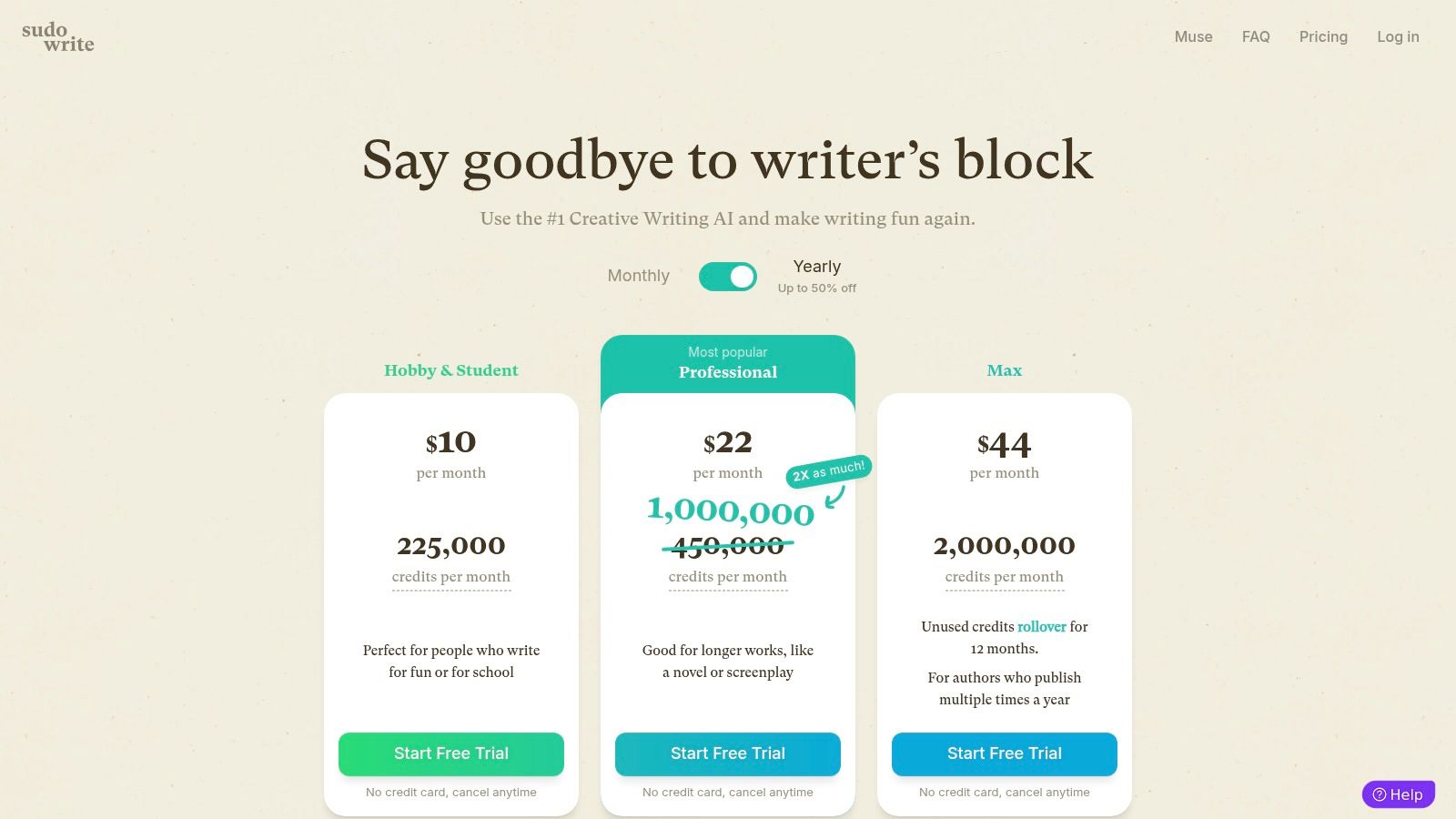
Key Features & Pricing
| Feature | Student Plan ($10/mo) | Hobby & Student Plan ($25/mo) | Pro Plan ($100/mo) |
|---|---|---|---|
| Word Credits | 30,000 | 90,000 | 300,000 |
| Story Bible | Yes | Yes | Yes |
| Private ‘My Voice’ | Yes (1,000 words) | Yes (10,000 words) | Yes (100,000 words) |
| AI Model Choice | Standard | Best Models | Best & Experimental |
Best For: Fiction authors, especially novelists, who need a dedicated tool for drafting, expanding scenes, and managing complex story continuity.
Pro Tip: Train the 'My Voice' feature by feeding it at least 2,000 words of your best, most representative writing. This allows Sudowrite to generate new prose that mimics your unique style, significantly reducing editing time needed to correct a generic AI tone.
Sudowrite's credit-based system means users on lower tiers must monitor their usage, which can be a drawback for heavy drafting sessions. While the user experience is designed for novelists, it can have a steeper learning curve than simpler tools. For those who invest the time, it provides unparalleled control over the fiction writing process, from the first brainstorm to the final polished chapter.
6. NovelAI
For authors focused on imaginative, long-form creative writing, NovelAI offers a highly specialized experience. It has gained a strong following, particularly among serial fiction and genre writers, for its ability to continue scenes with creative flair. Its models are fine-tuned specifically for storytelling, resulting in prose that often feels more narrative-driven than general-purpose AIs.

Unlike platforms that try to manage an entire book project, NovelAI focuses purely on the act of writing. Users input a starting prompt and can then generate text continuations, with fine-grained settings to control the output's style and randomness. The platform’s strength lies in its memory and context features, allowing it to stay consistent with established plot points and character voices over thousands of words, making it a powerful tool for drafting chapter by chapter.
Key Features & Pricing
| Feature | Paper (Free Trial) | Tablet ($10/mo) | Scroll ($15/mo) | Opus ($25/mo) |
|---|---|---|---|---|
| Context Size | 2048 Tokens | 3072 Tokens | 6144 Tokens | 8192 Tokens |
| Text Generations | 100 Actions | Unlimited | Unlimited | Unlimited |
| Image Generation | Yes (Anlas Trial) | Yes (1k Anlas/mo) | Yes (1k Anlas/mo) | Yes (10k Anlas/mo) |
| TTS Generation | Yes (50 gens/mo) | Yes (100 gens/mo) | Yes (500 gens/mo) | Yes (1k gens/mo) |
Best For: Creative and genre fiction authors who need a powerful co-writer for scene continuation and imaginative prose drafting.
Pro Tip: Experiment with NovelAI's advanced settings, like the "Module" system, to train it on specific styles (e.g., "Classic Literature" or "Cross-Genre"). This helps steer the AI toward the precise tone your manuscript requires.
While NovelAI excels at generating creative prose, getting the best results often requires tweaking prompts and settings. Understanding the fundamentals of a good text generation process will help you guide the AI more effectively. Remember that its web editor is utilitarian; for final formatting and manuscript organization, you will likely need to export your work to a dedicated word processor or book editing suite.
7. Jasper
Originally built for marketers, Jasper has evolved into a powerful AI platform that excels at creating brand-aligned, long-form content, making it a strong contender for non-fiction authors. Its core strength lies in governance and consistency. For authors writing business books, memoirs, or guides that must adhere to a specific tone or brand identity, Jasper provides a structured environment that other, more freewheeling AIs lack.
The platform's standout feature is its "Canvas," an open-ended document editor where you can command the AI to draft, expand, and rewrite sections of your manuscript. This is complemented by Brand Voice and Knowledge features, which allow you to upload style guides, research documents, and source material. The AI then uses this information to ensure every generated word stays true to your unique perspective and factual basis, a critical function for non-fiction work.
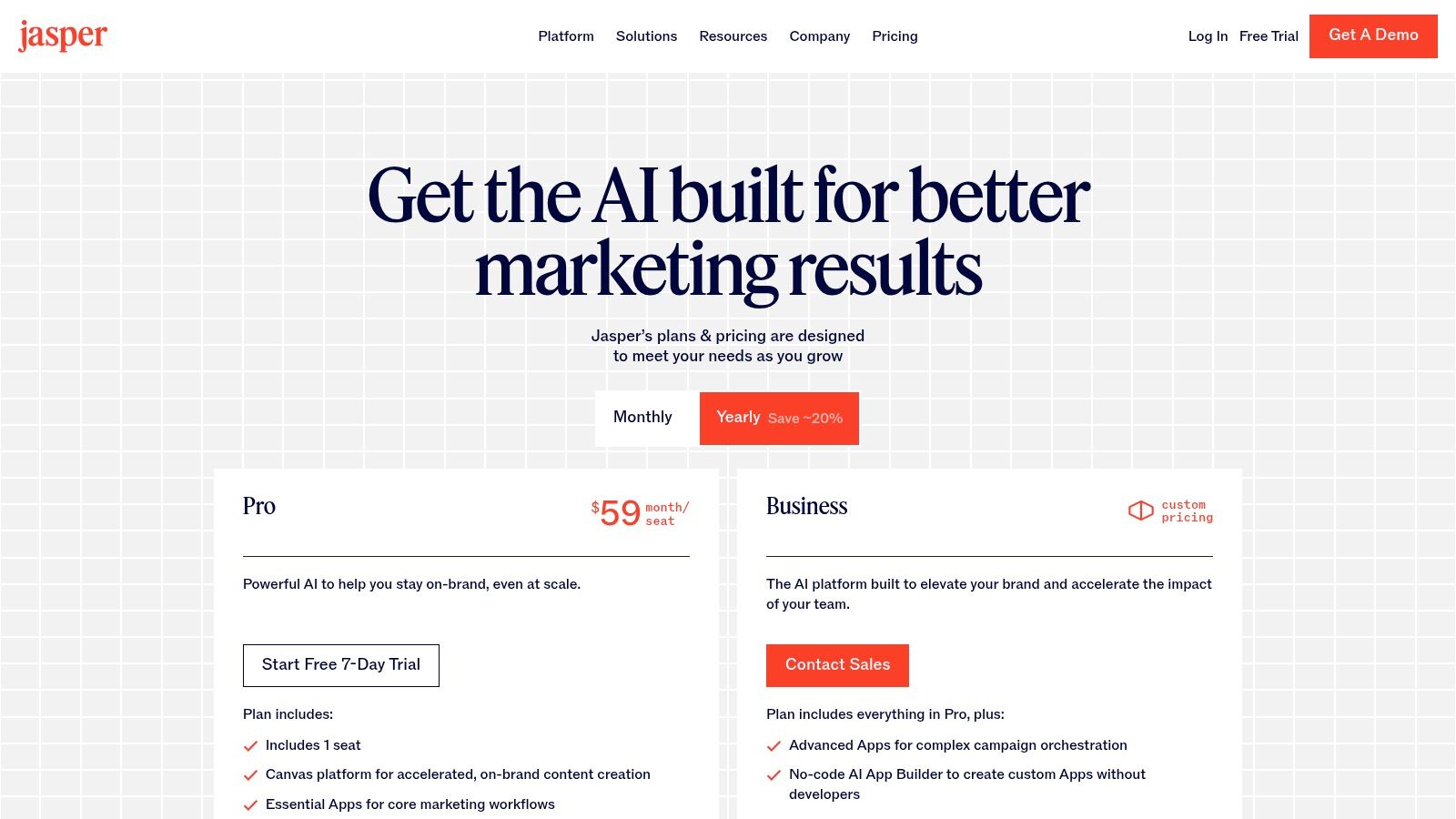
Key Features & Pricing
| Feature | Creator Plan ($39/seat/mo) | Teams Plan ($99/seat/mo) | Business Plan (Custom) |
|---|---|---|---|
| Brand Voices | 1 | 3 | Unlimited |
| Knowledge Base | 5 Assets | 150 Assets | Unlimited |
| Long-Form Canvas | Yes | Yes | Yes |
| Team Collaboration | No | Yes (3 seats min) | Yes (SSO, API) |
Best For: Non-fiction authors, business leaders, and collaborative teams who need to produce a book that is highly consistent with an established brand voice or extensive research.
Pro Tip: Use the "Workflows" feature to create a repeatable chapter-drafting process. You can build a multi-step pipeline that takes a chapter title, generates an outline, drafts each section based on your uploaded research, and then polishes the tone to match your Brand Voice, significantly speeding up first drafts.
While Jasper is one of the best AI for writing a book in the non-fiction and business categories, its creative fiction capabilities are less developed than tools built specifically for novelists. Authors focused on genre fiction may find its outputs too structured. It’s also important to remember that even with strong brand controls, final editing is key to ensuring the manuscript truly captures a personal, human touch.
8. Writesonic
Writesonic positions itself as more than just a writing assistant; it's a content marketing suite. This makes it an exceptionally good AI for writing a book if your project is non-fiction, an e-book for lead generation, or part of a larger brand-building strategy. It excels at creating SEO-optimized articles and long-form content, making it ideal for authors who need their work to be discoverable online from the moment it's published.

While its creative fiction tools are less developed than some competitors, its strength lies in combining content generation with powerful analytics. Features like AI search visibility tracking help authors understand how their topic is performing on platforms like Google SGE and Perplexity. This data-driven approach is invaluable for authors who are also marketers, ensuring their book finds its intended audience.
Key Features & Pricing
| Feature | Free Plan | Business Plan ($19/mo) | Enterprise |
|---|---|---|---|
| Word Generation | 10,000 Premium Words/mo | 200,000 Premium Words/mo | Custom |
| SEO Features | Basic | Advanced Keyword Research | Custom |
| AI Search Visibility | No | Yes (GEO Monitoring) | Yes |
| Integrations | No | Zapier, SurferSEO | API Access, SSO |
Best For: Non-fiction authors, marketers, and entrepreneurs who need to create SEO-optimized book content and track its online visibility.
Writesonic’s focus on the entire content lifecycle, from drafting to discoverability, offers a unique advantage. For authors whose primary goal is marketing and search engine presence, this platform provides tools that other, more creatively-focused AI writers lack. For a deeper look at how AI fits into a marketing workflow, exploring a breakdown of Jasper AI for marketing can provide additional context on leveraging these powerful platforms.
9. Rytr
For authors seeking a simple, no-frills tool without a steep learning curve or high price tag, Rytr presents a compelling option. While not explicitly designed as a dedicated novel-writing suite, its long-form editor and "Continue Ryting" feature make it a surprisingly capable assistant for drafting short chapters, fleshing out outlines, or converting blog posts into book content. Its main appeal is accessibility, offering a clean interface that gets you writing in minutes.
Rytr is one of the best AI for writing a book on a strict budget, especially for authors in the early concept stages. The tool provides a straightforward way to generate initial ideas, character sketches, and scene fragments without the complexity of more advanced platforms. It’s particularly useful for overcoming writer's block by quickly producing text that you can then heavily edit and refine into your own voice.
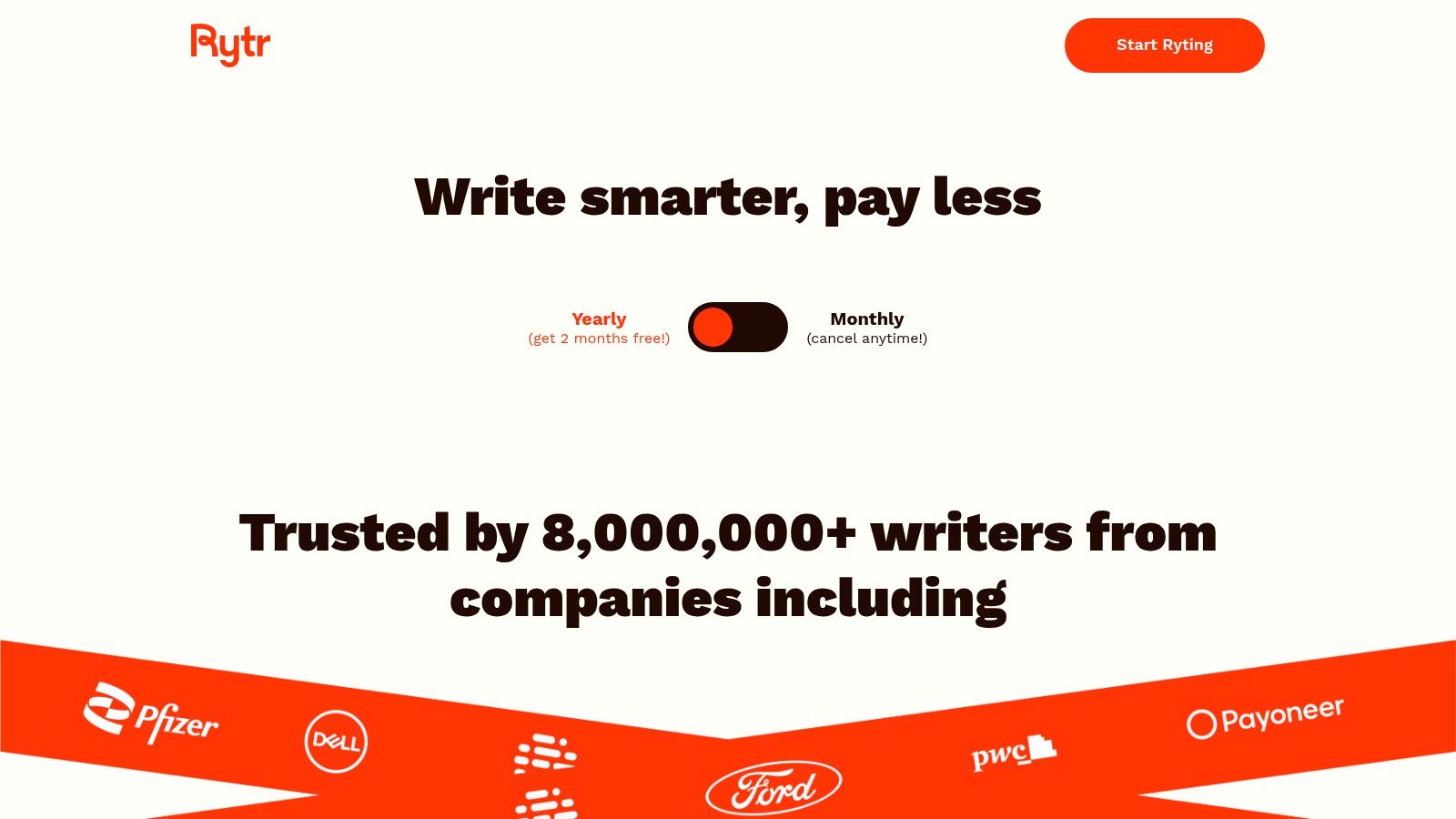
Key Features & Pricing
| Feature | Free Plan | Saver Plan ($9/mo) | Unlimited Plan ($29/mo) |
|---|---|---|---|
| Generations | 10k chars/mo | 100k chars/mo | Unlimited Chars/mo |
| Tones & Use Cases | 40+ | 40+ | 40+ |
| Plagiarism Checker | No | 50k chars/mo | 100k chars/mo |
| Custom Use Case | No | No | Yes |
Best For: Budget-conscious authors and beginners who need a simple tool for drafting short-form content, outlining, or a blog-to-book strategy.
Pro Tip: Use Rytr’s "Blog Idea and Outline" use case to generate chapter structures. Then, select a section heading and use the "Paragraph" command to flesh it out, piece by piece, building your chapter in manageable sections.
10. ProWritingAid
Once the first draft is complete, the real work of refining begins, and this is where ProWritingAid shines as a premier AI editing suite. It moves beyond simple grammar checks to offer deep, craft-focused analytics designed for novelists. With over 25 distinct reports, it dissects your manuscript for issues like pacing, sentence length variation, overused words, and clunky dialogue, providing a comprehensive diagnostic for improving your prose.
It's not a drafting tool at its core; instead, it's the best AI for writing a book's crucial revision passes. The platform's strength lies in transforming a rough manuscript into a polished, publishable work. By flagging stylistic weaknesses and providing actionable suggestions, it empowers authors to elevate their writing with data-driven insights, ensuring every chapter is as strong as the last.
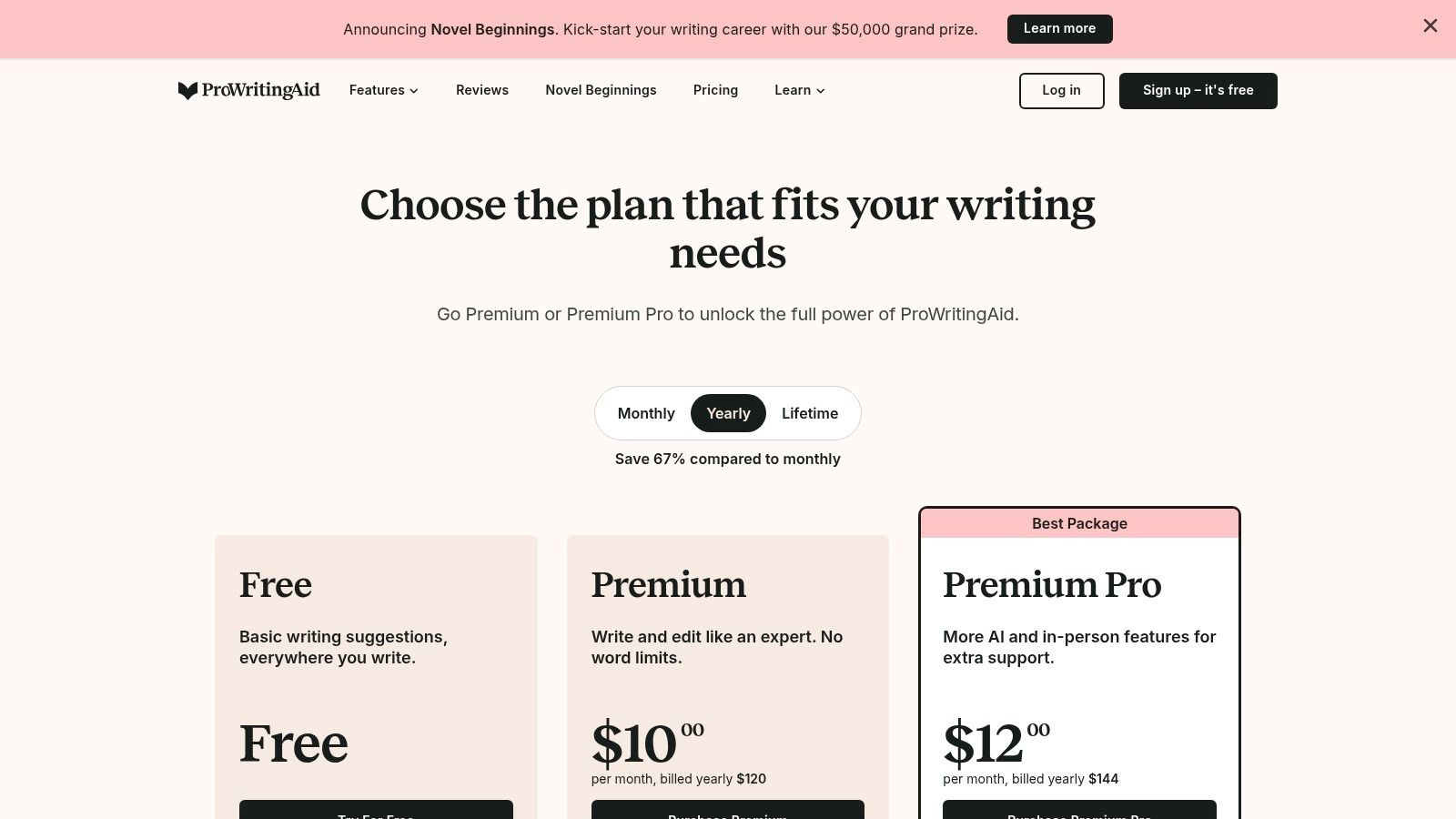
Key Features & Pricing
| Feature | Free Plan | Premium ($30/mo) | Premium Pro ($36/mo) |
|---|---|---|---|
| Word Limit | 500 words online | Unlimited | Unlimited |
| Integrations | Browser, basic Docs/Word | Full integrations | Full integrations |
| AI Sparks | 5 per day | 50 per day | 200 per day |
| Manuscript Analysis Credits | No | 2 per year | 10 per year |
| Licensing | N/A | Annual, Lifetime | Annual, Lifetime |
Best For: Authors in the editing and revision stages who need a powerful diagnostic tool to analyze and improve their manuscript's style, pacing, and prose.
Pro Tip: Run the "Pacing" report on individual chapters to identify sections that might drag. Use this data to tighten descriptions or inject action where needed, improving the reader's experience significantly.
11. Grammarly
While many tools focus on drafting from scratch, Grammarly excels at the crucial final stages of writing: polishing and refining. Known for its ubiquitous grammar, spelling, and style checker, it has evolved into a powerful AI writing assistant. For authors, its strength lies in ensuring consistency and clarity at the line level, making it one of the best AI tools for the editing phase of writing a book. It’s ideal for cleaning up drafted chapters, perfecting a query letter, or ensuring a book synopsis is flawless.
Grammarly’s platform is not designed for narrative structuring or plot development. Instead, it acts as an ever-present editor that integrates directly into your writing software, from Google Docs to Scrivener. Its generative AI features can help rephrase awkward sentences or adjust the tone of a passage, but it truly shines in its core mission: making every word count. Its suggestions on conciseness, engagement, and delivery can transform a rough draft into a professional manuscript ready for submission.
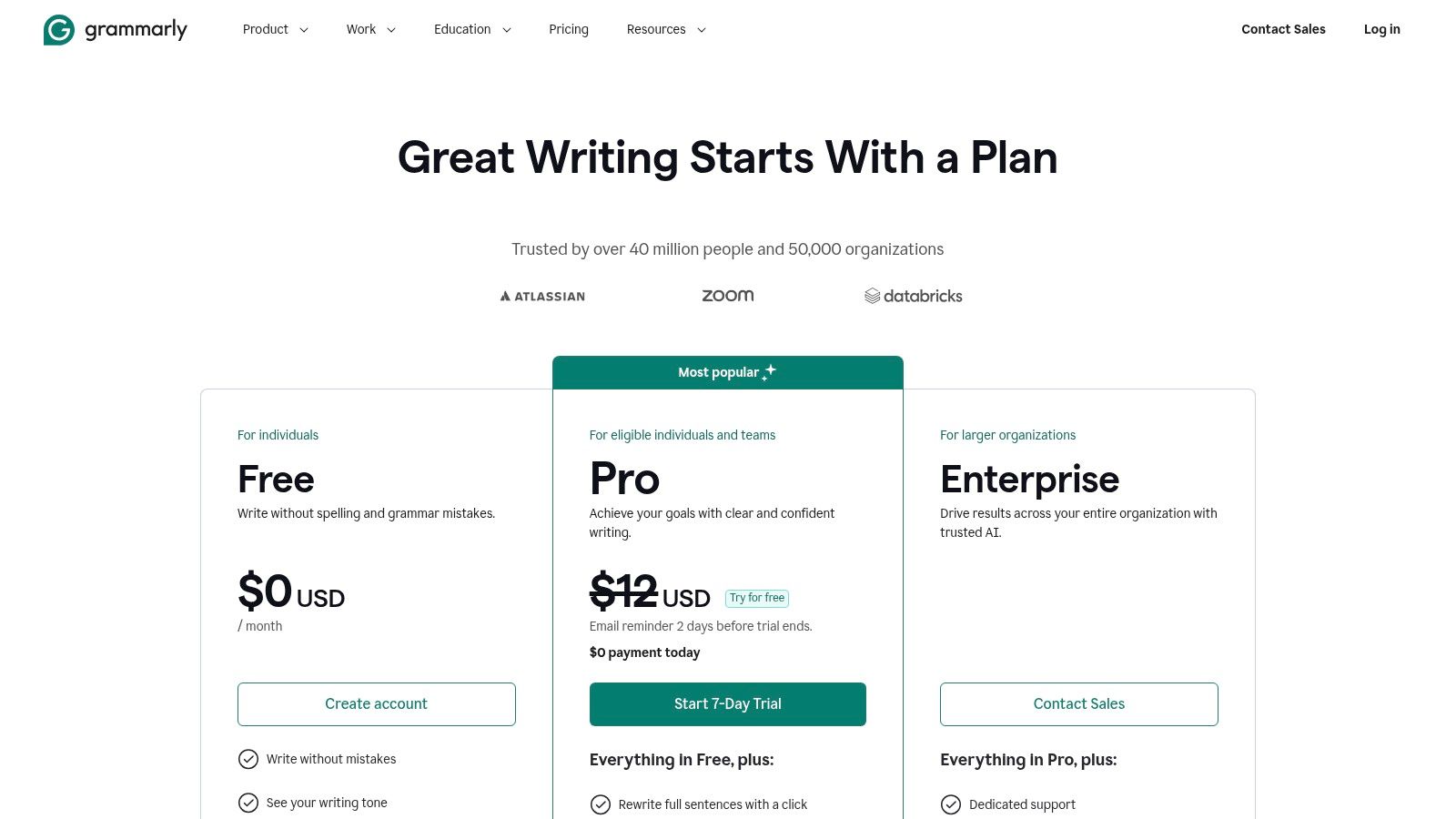
Key Features & Pricing
| Feature | Free Plan | Premium ($12/mo) | Business ($15/user/mo) |
|---|---|---|---|
| Basic Suggestions | Grammar, Spelling, Punctuation | Grammar, Spelling, Punctuation | Grammar, Spelling, Punctuation |
| Advanced Suggestions | No | Clarity, Tone, Style | Clarity, Tone, Style |
| Generative AI | 100 prompts/mo | 1000 prompts/mo | 2000 prompts/user/mo |
| Admin & Security | No | No | SSO, Analytics, Data Loss Prevention |
Best For: Authors focused on the line-editing and proofreading stages, ensuring grammatical perfection and consistent style across their manuscript.
Pro Tip: Create a custom Style Guide within Grammarly Business to enforce your unique narrative voice or world-specific terminology (e.g., character names, made-up words). This ensures the AI provides suggestions that align with your fictional universe, not just standard English.
12. Novelcrafter
Novelcrafter is a powerful book project manager designed specifically for novelists who want deep organizational tools combined with the flexibility of choosing their own AI. Instead of locking you into a single proprietary model, it operates on a "bring your own key" (BYOK) system. This approach allows authors to connect to their preferred AI vendors like OpenAI, Anthropic, OpenRouter, or even local models, giving them complete control over model choice and cost.
This platform excels at managing the entire writing ecosystem, from individual scenes to complex series bibles and character codexes. Its novelist-centric workspace keeps your manuscript, world-building notes, and research neatly organized in one place. For authors seeking a dedicated writing environment that integrates the best AI for writing a book without vendor markup, Novelcrafter offers an ideal balance of structure and freedom.
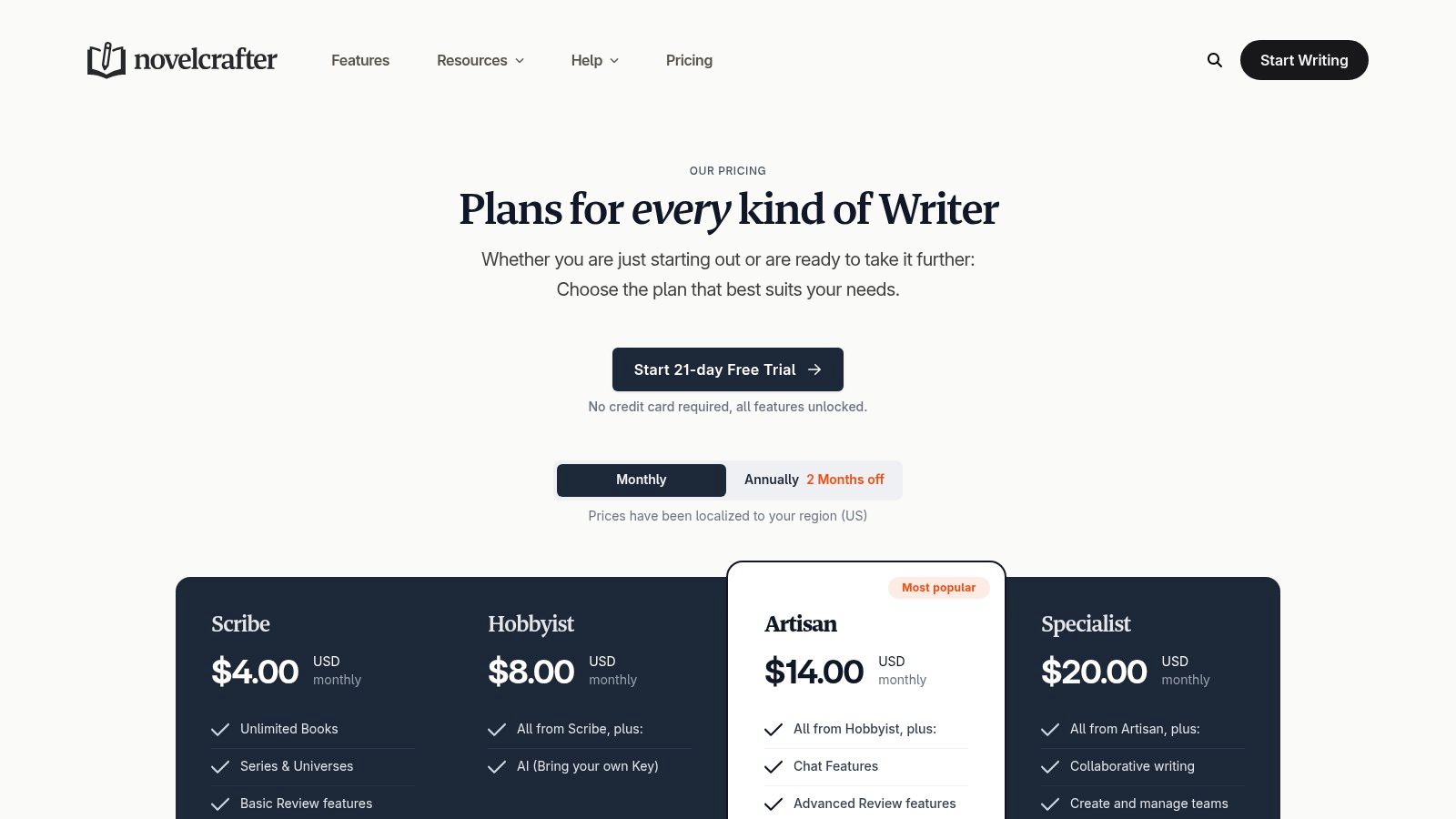
Key Features & Pricing
| Feature | Novice ($8/mo) | Journeyman ($15/mo) | Master ($25/mo) |
|---|---|---|---|
| BYOK AI Access | Yes (OpenAI, Anthropic, etc.) | Yes | Yes |
| Collaboration | No | 2 Collaborators | 4 Collaborators |
| Version History | 30 Days | 90 Days | 1 Year |
| Projects | Unlimited | Unlimited | Unlimited |
Best For: Technically-inclined authors who want to manage series-level projects in a dedicated workspace and use their preferred AI models without paying a premium.
Pro Tip: Use Novelcrafter’s "Codex" to store all your character traits, locations, and magic systems. When you generate new text, the AI can reference the Codex to ensure consistency across your entire manuscript, preventing plot holes and character inconsistencies.
While the BYOK model offers great flexibility, it does require a separate API setup with an AI provider, which can be a technical hurdle for some users. It's crucial to understand the basics of API usage and pricing to manage your costs effectively. Furthermore, since you're providing the model, the quality of the output is entirely dependent on the AI you choose; learning how to write effective prompts for creative writing will significantly improve your results.
Top 12 AI Book-Writing Tools — Comparison
| Tool | Core features & USP (✨ / 🏆) | UX / Quality (★) | Pricing & Value (💰) | Best for (👥) |
|---|---|---|---|---|
| Azure OpenAI Service: Access The Most Advanced Models | ✨ GPT‑4 family, enterprise security, scalable deployment, author workflows 🏆 | ★★★★ | 💰 Enterprise / pay‑as‑you‑go — flexible but can be costly | 👥 Publishers, teams, enterprise authors |
| OpenAI — ChatGPT | ✨ Custom GPTs, long context models, multi‑platform projects | ★★★★★ | 💰 Free → Business/Enterprise plans; clear upgrade path | 👥 Solo authors, hybrid teams, rapid drafting |
| Anthropic — Claude | ✨ 200K‑token context, strong summarization & Projects 🏆 | ★★★★★ | 💰 Competitive per‑token API; tiered plans | 👥 Authors needing multi‑chapter consistency |
| Google — Gemini | ✨ Gemini 2.5 + NotebookLM, Docs/Workspace integration | ★★★★ | 💰 Subscription tiers; good value inside Google ecosystem | 👥 Research‑heavy authors, Google Workspace users |
| Sudowrite | ✨ Draft mode, Story Bible, private style cloning — fiction‑focused 🏆 | ★★★★ | 💰 Mid‑tier subscription, credit model on lower plans | 👥 Novelists, scene‑generation users |
| NovelAI | ✨ Custom styles, tiered context memory, imaginative generation | ★★★★ | 💰 Cost‑effective subscriptions; predictable pricing | 👥 Serial fiction writers, creative experimenters |
| Jasper | ✨ Canvas for long‑form, brand voice + knowledge uploads | ★★★★ | 💰 Per‑seat pricing; scales for teams (can rise) | 👥 Non‑fiction authors, marketer‑authors |
| Writesonic | ✨ SEO workflows + AI visibility tracking for discoverability | ★★★★ | 💰 Annual plans can be value‑packed; tier complexity | 👥 Creator‑marketers, non‑fiction authors |
| Rytr | ✨ Simple long‑form mode, multiple tones, easy UI | ★★★ | 💰 Very low entry price; unlimited annual generations | 👥 Budget authors, early‑stage writers |
| ProWritingAid | ✨ 25+ craft reports, Chapter Critique, manuscript analytics 🏆 | ★★★★ | 💰 Monthly/annual/lifetime options; editing‑focused value | 👥 Editors, revision‑focused authors |
| Grammarly | ✨ Ubiquitous clarity/grammar + generative prompts | ★★★★ | 💰 Freemium → Business tiers with enterprise controls | 👥 All authors needing polish & cross‑platform checks |
| Novelcrafter | ✨ Book/series manager with BYOK (OpenAI/Claude/local) | ★★★★ | 💰 Affordable tiers + 21‑day trial; no free ongoing plan | 👥 Novelists who want project org + cost control |
Choosing Your Co-Author: Making the Final Decision
Navigating the landscape of AI writing tools can feel as complex as plotting a multi-arc fantasy epic. We've explored everything from the raw power of foundation models like GPT-4 and Claude 3 to specialized, author-centric platforms such as Sudowrite and Novelcrafter. The journey through this guide has demonstrated one undeniable truth: there is no single "best AI for writing a book" that fits every author. The ideal tool is a deeply personal choice, dependent on your genre, workflow, and individual creative process.
Your task now is to transition from researcher to decision-maker. The right AI partner won't just speed up your word count; it will enhance your creativity, challenge your assumptions, and help you overcome the inevitable hurdles of bringing a book to life. This decision is about finding a co-author, a tool that complements your strengths and mitigates your weaknesses.
Recapping the AI Author's Toolkit
Let's distill our findings into core takeaways. The tools we've covered fall into a few key categories, each serving a distinct purpose in the authorial journey:
- For the Architect (Maximum Control & Flexibility): If you're a writer who wants to build a bespoke writing system from the ground up, the foundational models are your playground. Azure OpenAI Service, OpenAI's ChatGPT, Anthropic's Claude, and Google's Gemini offer unparalleled power. They require more effort in prompt engineering but provide the ultimate creative freedom for world-building, brainstorming, and generating unique prose from scratch.
- For the Storyteller (Fiction-Focused Features): Authors of fiction, particularly in genre fiction, will find purpose-built platforms immensely valuable. Sudowrite excels at brainstorming and evocative prose generation with its Story Bible and Rewrite features. Novelcrafter offers a structured, scene-based approach perfect for plotters, while NovelAI provides a unique sandbox for story exploration and character interaction.
- For the Marketer & Non-Fiction Author (Content & Polish): If your book is part of a broader content strategy or a non-fiction project, tools with a marketing pedigree shine. Jasper and Writesonic offer robust templates, brand voice consistency, and features designed to produce clear, engaging, and SEO-friendly content that extends beyond the manuscript itself.
- For the Editor (Refinement & Precision): Once the draft is complete, the final polish is crucial. AI-powered editors like ProWritingAid and Grammarly go far beyond simple spell-checking. They analyze sentence structure, pacing, style, and clarity, providing the deep-level feedback needed to elevate a good draft into a great one.
How to Choose Your Perfect AI Partner
Making the final decision requires self-reflection. Ask yourself these critical questions to narrow down the options and find the best AI for writing a book for you:
- What is my primary goal? Are you trying to defeat writer's block with endless ideas (Sudowrite)? Do you need help structuring a complex plot (Novelcrafter)? Or is your main focus on cleaning up a finished manuscript (ProWritingAid)? Define the single biggest problem you need to solve.
- What is my genre? A romance novelist will benefit from different AI strengths than someone writing a technical manual. Fiction writers should gravitate toward tools with strong narrative and character-development features, while non-fiction authors might prioritize research, summarization, and clarity.
- How hands-on do I want to be? Are you comfortable crafting detailed, multi-part prompts in a chatbot interface like ChatGPT or Claude? Or do you prefer a more guided experience with buttons and templates designed specifically for authors? Your technical comfort level is a major deciding factor.
- What is my budget? While many tools offer free trials or tiers, professional-grade features come at a cost. Determine your monthly budget and compare it against the pricing plans of your top contenders. Remember to view this as an investment in your productivity and creative output.
The most effective strategy is to treat this as a trial period. Shortlist two or three tools based on your answers above and commit to using their free trials for a specific project. Write a chapter, develop a character, or edit a few pages in each. The one that feels less like a machine and more like an intuitive creative partner is likely your winner. Your next masterpiece is waiting, and with the right AI collaborator, you're better equipped than ever to write it.
Ready to organize all the brilliant ideas, character notes, and plot points you generate with these AI tools? ThinkZipper offers a powerful and intuitive outliner to structure your book from concept to final draft. Stop juggling scattered documents and build your manuscript's blueprint with clarity and ease at ThinkZipper.


