

Introduction
Imagine trimming hours off your post-production schedule while polishing footage with the precision of a seasoned editor. That’s the promise of today’s most advanced AI video platforms — seamlessly blending automation with creativity. As workflows become faster and more intelligent, video creators are increasingly turning to solutions that do more than help—they anticipate needs and enhance output. For instance, some AI-driven platforms can now detect and tag scenes automatically, potentially slashing editing time by nearly half (AI in video editing market estimates show up to a 50% reduction in editing time) Gitnux Report, 2025. Meanwhile, cloud-based AI software is delivering up to 40% faster rendering and workflow efficiency gains by over 40%, according to industry forecasts Congruence Market Insights, 2025.
At the core of this transformation are ai powered video editing tools—innovations that not only adapt to creative intent but also elevate production with smart automation. Take Adobe’s recent “Sneaks” demonstrations: the experimental Project Frame Forward lets editors remove or insert elements in a single frame, and the AI extrapolates these changes across the entire footage—no tedious masking required The Verge, 2025. Practical workflows like this underscore how machine intelligence can amplify human creativity.
Across the industry, adoption rates are climbing rapidly. In 2023, over half of video companies had incorporated AI-driven tools into content creation pipelines, and the global market for AI in video is forecast to surge from $1.7 billion in 2022 to over $12 billion by 2030 Gitnux Report, 2025. These shifts reflect both technological advancement and growing confidence among creators—about 86% report that AI helps produce content they wouldn’t have managed otherwise TechRadar (Adobe survey), 2025.
With this in mind, the goal of this article is to illuminate how these intelligent video assistants are reshaping editing—from enhancing productivity and reducing errors to delivering compelling narrative tools and agility. You’ll discover concrete benefits, real-world applications, and actionable insights to help you harness AI creatively and effectively.
Unlocking Efficiency and Creativity with AI‑Powered Video Editing Tools
Building on the momentum established earlier, this section delves into how AI‑powered video editing tools streamline workflows while expanding creative potential. In today’s fast-paced digital environment, professionals and creators alike are turning to intelligent assistants to handle repetitive tasks and elevate production quality.
Automating Tedious Tasks for Faster Output
One of the most tangible advantages arises from automating repetitive tasks. Tools like Descript offer a transcript-based interface that allows editors to “cut” and rearrange video by editing the text, dramatically simplifying editing for podcasts and instructional videos. Descript even includes an “Overdub” feature to correct spoken content via synthesized voice—an effortless way to refine recordings without re-shooting aitechwealth.com. Similarly, WhatsCut’s Pictory can distill long-form content—such as webinars or lectures—into short, captioned clips optimized for social platforms, enabling users to publish engaging content in a fraction of the time aitechwealth.com.
Empowering Creative Control and Cinematic Quality
On the creative front, advanced platforms like Runway ML deliver capabilities normally reserved for high-end studios. Its Gen‑4 model leverages AI to maintain visual consistency and simulate camera movements, while motion tracking and style transfer open up cinematic editing possibilities without complex manual labor en.wikipedia.org. Adobe’s Premiere Pro, enriched with Firefly generative features, now extends clip duration, translates captions automatically, and enables natural-language search—empowering editors to focus on storytelling, not technical constraints theverge.com.
Real‑World Examples Highlighting Impact
- A fitness coach repurposed weekly blog content into engaging social media videos using Pictory, and within two months, tripled audience engagement—demonstrating how automation and repurposing can drive measurable engagement growth aiofthedecade.com.
- Runway’s AI tools powered the creation of numerous short films showcased at the AI Film Festival, where over 6,000 global submissions illustrated both the rise of AI integration and industry recognition for creative AI‑assisted production apnews.com.
Actionable Insights for Adopting AI Tools
- Start by integrating tools like Descript or Pictory to automate transcription and highlight extraction, freeing up time for narrative refinement.
- Leverage Runway or Premiere Pro’s AI features when aiming for stylistic control or cinematic polish—especially if you frequently work with visual effects, color grading, or dynamic re-framing.
- Monitor performance and engagement metrics after adoption to gauge impact: for example, tracking audience retention and edit turnaround time can validate the tool’s ROI.
By blending automation with creative depth, intelligent interfaces not only save time but also inspire new storytelling approaches—helping creators stay agile while producing higher-quality videos.
Innovative Features of AI Powered Video Editing Tools
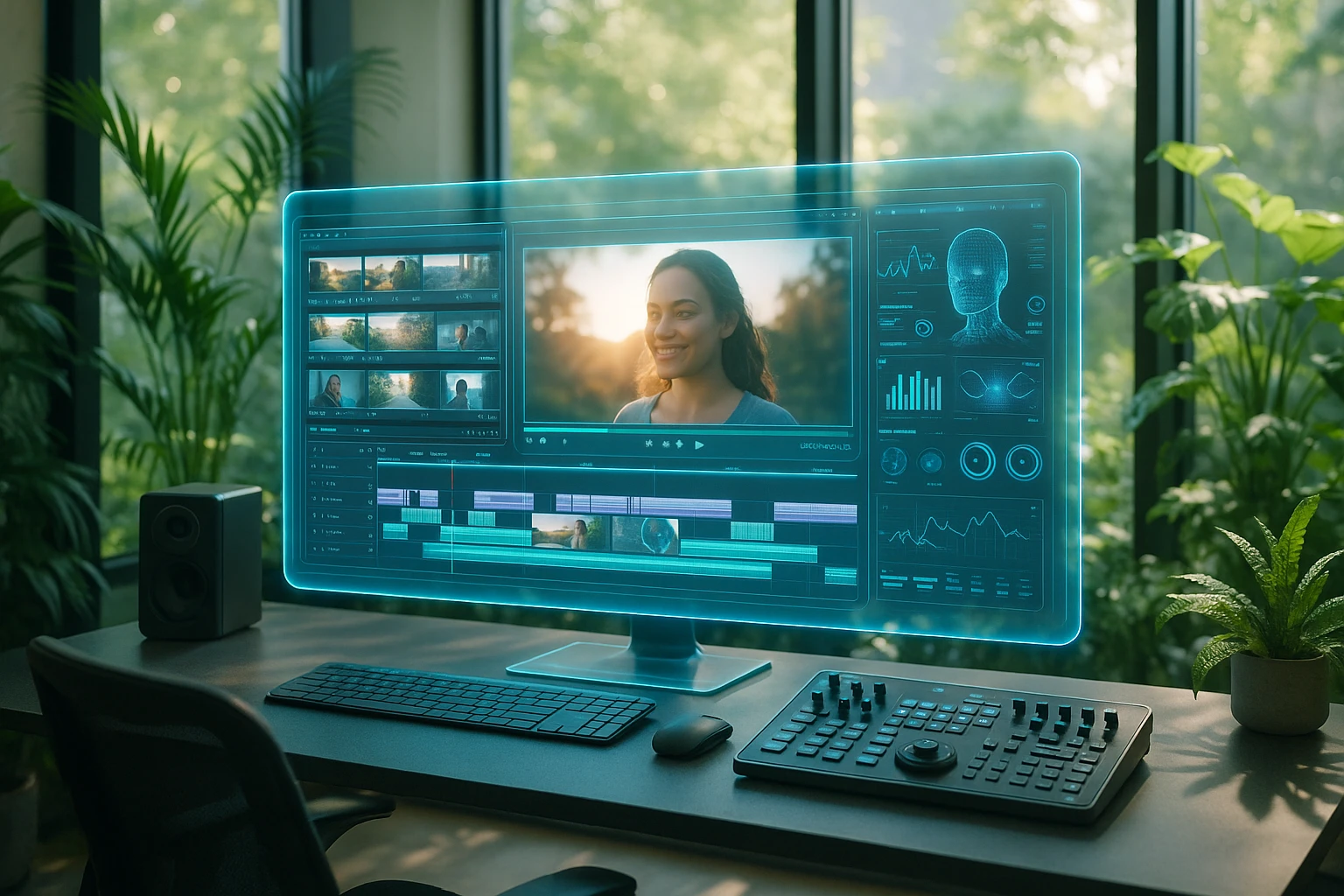
AI powered video editing tools have revolutionized the creative process, providing innovative features that enhance video production by making it more accessible, efficient, and high-quality. These tools are equipped with advanced capabilities enabling users to automate complex editing tasks that previously required hours of manual work. A particularly striking feature is the automatic scene detection, which analyzes video content to identify key sections, allowing users to swiftly organize and edit without combing through hours of footage.
One of the most transformative aspects is the ability to automatically generate subtitles and captions. Using speech recognition technology, AI tools can transcribe spoken words into text quickly and accurately, making content more accessible to a global audience. This capability not only saves time but ensures compliance with accessibility standards. For example, platforms like Veed.io utilize AI to transcribe and translate content into multiple languages, broadening the reach of content creators internationally.
Enhancing audio quality is another remarkable feature offered by these tools. AI can effectively remove background noise and enhance voice clarity, creating a more polished final product. This is particularly beneficial for content creators who work in less controlled environments where ambient noise can be a significant issue. According to The New York Times, tools like Adobe Premiere Pro use AI-driven filters to provide professional-grade sound quality effortlessly.
The integration of AI into video editing also includes intelligent color correction features. These features automatically adjust the colors and tones in footage to ensure consistency throughout the video. AI can detect the lighting variations in different scenes and apply seamless corrections, preserving the aesthetic vision the creator intends. This aspect is crucial for maintaining a balanced and appealing visual output, especially in professional settings.
Furthermore, AI powered video editing tools offer facial recognition technologies that enhance tagging accuracy and enable personalized content recommendations. By recognizing and analyzing the visual components of a video, these tools can automate various tasks, such as sorting footage based on featured individuals. This advanced technology not only streamlines the editing process but also enhances user interaction by suggesting related content and optimizing user engagement strategies.
Overall, AI powered video editing tools are at the forefront of innovation, continuously developing to offer unprecedented creative control and efficiency to video editors. As these technologies evolve, they promise to keep revolutionizing the industry, making high-quality video production more accessible than ever before.
Benefits and Challenges of AI Powered Video Editing Tools
AI powered video editing tools offer numerous advantages, making them highly appealing to both amateur and professional creators. One core benefit is the significant reduction in production time. Tools like Adobe Premiere Pro and Final Cut Pro have integrated AI features that automate mundane tasks such as sorting clips, stabilizing shaky footage, and color correction, allowing editors to focus more on their creative vision. According to a study by Adobe, users can cut editing time by up to 30% using AI-driven functionalities.
Moreover, the precision and accuracy offered by AI cannot be understated. Machine learning algorithms can analyze video content to ensure perfect timing for edits, transitions, and effects, resulting in a polished final product that meets professional standards. For instance, Lumen5 uses AI to transform blog posts into engaging video content seamlessly, highlighting the influencer of automation in multimedia presentations.
Real-World Applications
Professionals across industries are harnessing these innovations for varied purposes. Video marketers, for instance, have seen substantial improvements in campaign engagement rates by utilizing AI tools to produce personalized video content that resonates with their target audience. Educational platforms have also adopted these technologies to create interactive learning modules, ensuring content is both informative and engaging. A real-world example includes educators leveraging AI tools to tailor video lessons specific to student needs, thereby enhancing learning outcomes.
Platforms like ThinkZipper are instrumental in streamlining workflows by offering comprehensive solutions that integrate AI technologies effectively. ThinkZipper’s platform can help users manage large video projects with intuitive tools and real-time collaboration features.
Challenges to Consider
Despite these advantages, adapting to AI powered video editing tools comes with challenges. Privacy concerns arise as these AI models often require access to vast amounts of data to function optimally. Ensuring data security while leveraging these tools is essential. Furthermore, the initial cost and learning curve associated with these advanced tools can be prohibitive for some users. As a result, companies must weigh the investment against potential long-term productivity benefits.
As with any technology, balancing the integration of AI with maintaining creative control can be tricky. Creators must learn to collaborate with these intelligent systems effectively without compromising their artistic integrity. This shift in workflow necessitates not only technical acumen but also a mindset open to new methods and processes.
Overall, while AI powered video editing tools present exciting opportunities, they require thoughtful implementation to maximize their potential and address their inherent challenges.
Efficiency, Consistency, and Scalability in Real-World Practice
Moving forward from foundational definitions, it’s vital to explore how ai powered video editing tools are actively transforming workflows across industries. One clear benefit lies in the dramatic reduction of repetitive tasks: AI streamlines editing by auto-cutting silences, syncing audio, and generating subtitles—sometimes replacing hours of manual labor within minutes. For instance, Deloitte Digital reports that users of generative AI save an average of 11.4 hours per week in their working routines, especially in marketing and fast-paced production environments WeVideo blog wevideo.com.
Another practical advantage is consistency across content types. When producing a series of branded videos or educational materials, maintaining a uniform look and feel is critical. AI tools achieve this by applying preconfigured color grading, transitions, and templates across footage, eliminating the need for manual adjustments. This approach is particularly valuable for teams working with diverse input sources or varying lighting conditions, ensuring visual continuity and polished outputs digitalocean.com.
Scalability is increasingly essential for content creators and marketing departments. AI supports high-volume production by automatically generating platform-specific formats—like vertical videos for Reels, square videos for Instagram, and widescreen for YouTube—without requiring separate editing processes. Solo creators and microbrands benefit from faster production cycles and wider reach adaptability thanks to tools like Veed.io, Kapwing, and Pictory, which offer smart cuts, auto-subtitles, and automatic resizing glance.com.
Cost efficiency is another compelling outcome of deploying these tools. According to recent industry analysis, AI reduces human error by up to 35% and lowers production costs by around 20%, compared to traditional editing workflows. For example, a business producing ten marketing videos monthly might typically spend $5,000–$15,000 on human editors, whereas using AI tools costs only $500–$1,000—reflecting a potential 90% reduction in production expenditure IIDE blog iide.co.
These gains highlight how AI-powered tools enhance productivity, brand consistency, and budget optimization. Yet, successful application depends on human oversight to preserve creativity and narrative coherence—ensuring AI remains an augmenting force, not a substitutive one.
Advanced Features of AI-Powered Video Editing Tools
AI-powered video editing tools have revolutionized the editing landscape by offering a suite of advanced features that cater to both amateur and professional editors. These tools are designed to streamline complex editing tasks, allowing creators to focus more on storytelling and less on technical hurdles.
Automated Scene Detection and Editing
One of the standout features of these tools is automated scene detection. Traditional editing can be labor-intensive, requiring meticulous attention to detail to identify and segment scenes. AI technology, however, simplifies this process by automatically detecting and categorizing different scenes based on factors like lighting, color patterns, and audio cues. This feature is particularly beneficial for filmmakers, enabling quicker edits and more cohesive narratives. For example, Adobe Premiere Pro uses AI to automate scene edits, significantly reducing the time spent on first cuts.
Intelligent Audio Editing
Sound is a crucial element of any video. AI-powered video editing tools enhance audio quality by automatically reducing background noise and normalizing volume levels, thus ensuring a more professional output. Moreover, tools like Descript utilize machine learning algorithms to generate accurate transcripts and allow text-based audio editing. This can be particularly advantageous for content creators working on podcasts or interviews who require clear audio without investing in extensive manual editing.
Personalized Recommendations and Pre-built Templates
To assist users in achieving their desired aesthetic, many AI tools provide personalized content recommendations and pre-built templates. These suggestions are based on user behavior and project type, offering templates suited for a range of video styles, from corporate presentations to social media clips. This feature not only expedites the editing process but also enhances creativity by suggesting styles or elements the user might not have considered. According to a report by Forrester Research, companies utilizing AI-driven personalization see a 20% increase in conversion rates.
Enhanced Visual Effects and Filters
Advanced AI algorithms have the potential to apply sophisticated visual effects and filters that were once the domain of high-end studios. These include features like color correction, motion tracking, and even AI-generated animations. Video editors can now simulate complex effects with just a few clicks, making them accessible to a wider audience. Tools like Final Cut Pro and DaVinci Resolve have incorporated AI-driven effects to allow users to craft visually stunning content effortlessly.
The innovation in AI-powered video editing tools is transforming the landscape, making it more accessible and efficient. By leveraging these advanced features, creators can focus on enhancing their storytelling capabilities, pushing the boundaries of what’s possible in video production.
Real-World Success: How AI Elevates Video Production
Practical examples illuminate the profound impact of ai powered video editing tools on workflow efficiency and creative potential. In one notable case, an education marketing team used a custom-designed AI solution called Peersuma to streamline promo video production. The tool reduced editing time by an impressive 80% and accelerated scene search by 70%—allowing more rapid delivery of polished video content with minimal manual effort Tezeract case study. The outcome was faster turnaround and increased output without compromising quality.
Similarly, Quso.ai’s tools, integrated into Vidpros’ editing workflow, saved editors 30–50% of manual cutting time. This enabled teams to focus on creative enhancements rather than repetitive tasks. A client video transformed from a talking-head presentation into a visually engaging piece with b-roll, animated highlights, captions, and motion graphics—without any loss in message clarity Vidpros–Quso.ai report. The seamless shift allowed editors to innovate more and maintain consistent quality.
At an industry level, AI-enabled efficiencies are backed by broader data. One market report reveals that automation features such as scene detection and content tagging can slash editing time by up to 50%, empower creators to increase content output by 30%, and reduce production costs by nearly 20%. Viewer retention can rise by 25% due to AI-driven personalization, and by 2025, over half of all video content is expected to involve such technologies Market.us analysis. These figures demonstrate how smart automation reallocates human attention from technical drudge work to storytelling and creative refinement.
Influencers and digital entrepreneurs are also benefiting immensely. One content creator dramatically cut production time from six hours to one by leveraging ai powered video editing tools, automating scripting, editing, narration, and even thumbnail generation. His monthly income now ranges between $20,000 and $35,000—proof of how AI tools can supercharge productivity and profitability in content creation New York Post report. This balance of efficiency and creative control highlights how AI is reshaping the online video economy.
These examples illustrate not just incremental improvements, but transformative shifts in video production dynamics. Teams and creators of all scales can harness AI for faster turnarounds, higher engagement, and cost-effective workflows—while preserving the human touch in storytelling and creative nuance.
Conclusion: Embracing the Future of Video Editing
The advent of AI powered video editing tools has unlocked unprecedented possibilities in the realm of digital content creation. As these tools continue to evolve, they allow creators to enhance efficiency, creativity, and engagement without compromising the unique human elements of storytelling.
One of the key takeaways for creators is the ability to streamline their workflow. By automating tedious tasks such as clipping, transitions, and color correction, creators can dedicate more time to conceptualizing and fine-tuning their narratives. For example, tools like Adobe Premiere Pro’s Sensei technology utilize AI to automate video editing tasks, improving productivity significantly [source].
Actionable Insights: Tips for Integrating AI Tools
To harness the full potential of AI in video editing, it’s essential for professionals and enthusiasts to stay informed about the latest tools and technologies. Joining online communities and forums dedicated to video editing can provide continual learning and support. Additionally, participating in webinars and workshops can offer hands-on experiences with these tools, providing valuable insights into best practices.
For those hesitant to embrace AI due to a lack of technical expertise, starting with user-friendly platforms like Lumen5, which simplifies video creation with AI, can offer a gentle introduction to AI-powered editing [source]. Such tools often come with extensive tutorials and support systems, making the transition smoother.
Next Steps: Partner with Experts
As this technology continues to develop, staying ahead of the curve will be crucial. Working with experienced partners can significantly enhance the video production process. For businesses and creators looking to amplify their capabilities, collaborating with experts like ThinkZipper can provide comprehensive support tailored to specific needs, ensuring a smooth integration and optimized output.
In conclusion, AI powered video editing tools represent a transformative shift in content creation, opening the door to more dynamic, engaging, and efficient production processes. By adopting these innovative technologies, creators can not only enhance their current capabilities but also pave the way for future advancements, leading to richer storytelling and greater audience impact.


